What you’ll likely need
- Bucket + old towels
- Slip-joint pliers (or channel locks)
- Sink plunger (flat-bottom style)
- Drain snake (hand auger, 1/4" or 5/16")
- Gloves
Visual references
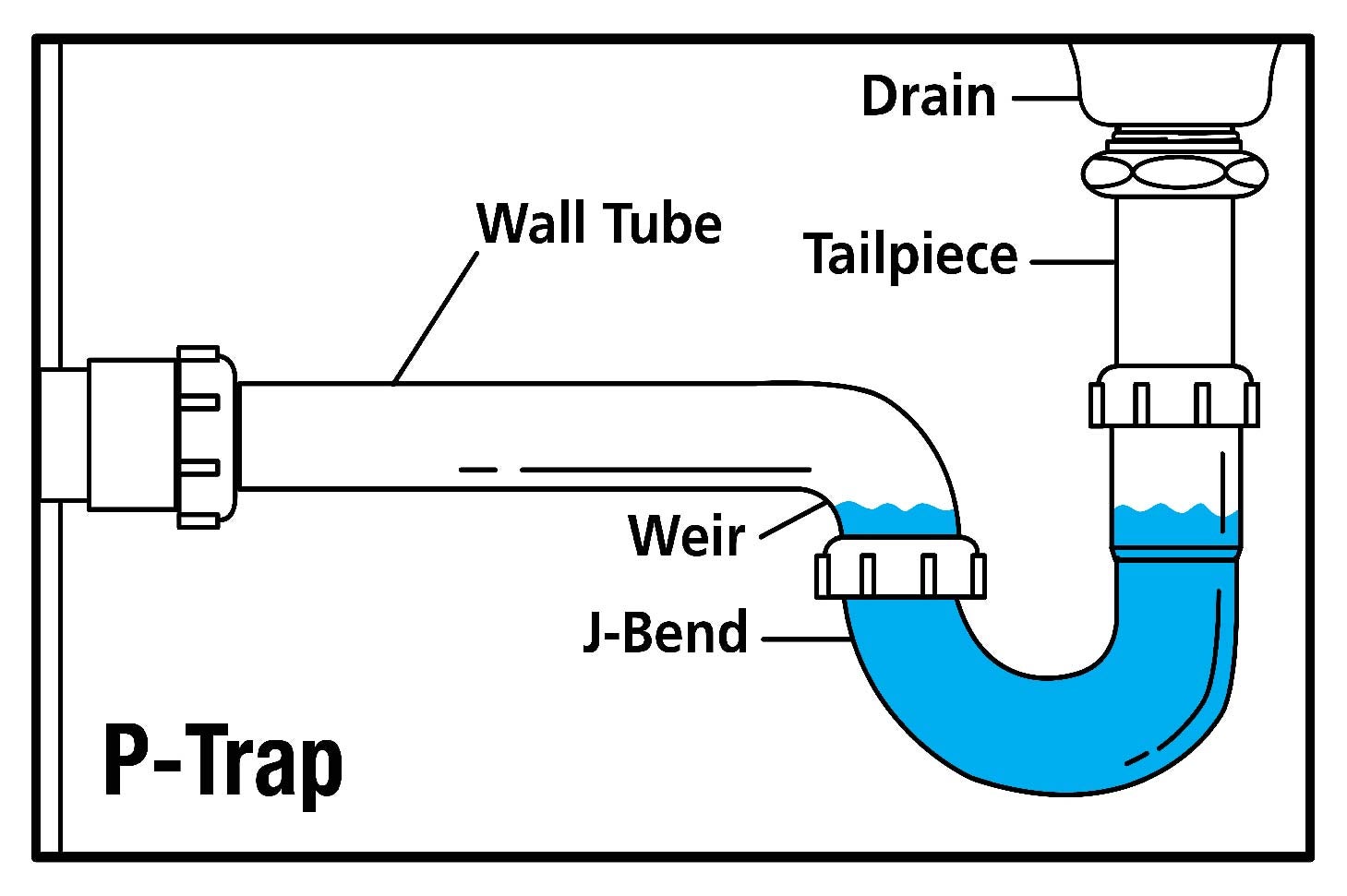 P-trap diagram (source: Oatey). Article
 Example under-sink double-bowl plumbing photo (source: DIY StackExchange thread).
Thread
Example under-sink double-bowl plumbing photo (source: DIY StackExchange thread).
Thread
Step-by-step fix (best mechanical order)
- Stop using the sink. Don’t run the disposal repeatedly. Bail out standing water into a bucket if needed.
- Quick disposal check (if you have one):
- Run cold water and the disposal for 10–15 seconds.
- If it only hums / won’t spin, turn power off and free it (most have a hex key socket on the bottom).
- Clean the P-trap.
- Put a bucket directly under the trap.
- Loosen the slip nuts, remove the U-bend, and clear out sludge/food.
- Reassemble and test.
If the trap is mostly clean and the sink still backs up, the clog is likely in the wall drain / horizontal run.
- Plunge correctly for a double sink.
- Plug the other bowl tightly with a stopper or a wet rag.
- Put a few inches of water in the bowl you’re plunging.
- Plunge hard 15–20 times, then repeat on the other side.
- Snake the drain (most effective next step).
- Remove the P-trap again.
- Insert the snake into the wall stub-out (not just the disposal branch).
- Feed 3–10+ feet, rotate as you go, retrieve debris, repeat until the line feels clear.
- Reassemble and flush with hot (not boiling) water.
- Confirm whether it’s bigger than the sink line.
- If nearby fixtures (bathroom sink/tub) also gurgle or drain slowly, you may have a main line issue.
- If only this sink is affected, it’s likely localized grease/food buildup in the kitchen branch.
Don’t do these
- Avoid chemical drain cleaners (especially with a disposal and if you might disassemble the trap).
- Don’t keep running the disposal against a backed-up line.
- Don’t use boiling water if you have PVC drain piping (hot tap water is fine).
When it’s time to call a plumber
- You can’t clear it with a snake (or it repeatedly returns within days).
- Multiple fixtures are backing up (possible main line obstruction).
- You suspect old cast iron with heavy scale or a collapsed line.